The world's trade routes are being redrawn in real time. The tensions playing out between the United States, Israel, and Iran aren't just a security story — they're an economic one, and the reverberations are being felt in boardrooms and balance sheets far beyond the immediate region. Capital is nervous. Supply chains are fragile. And the question that serious business leaders are sitting with isn't whether the storm will pass — it's whether their structures are built to hold while it rages.
Two concepts matter more than ever right now: Safe Harbor and Operational Continuity.
A Safe Harbor Is Not Just a Location
The instinct when things get uncertain is to find somewhere stable and park your assets there. That instinct isn't wrong — but it's incomplete. A geographic location alone doesn't protect anything. What actually protects capital is the legal architecture surrounding it.
For Gulf investors and broader Middle Eastern capital navigating this period, the real work isn't moving money from one place to another. It's building the right structures around it when it arrives. Asset structuring — transferring capital into jurisdictions with robust legal frameworks and internationally compliant infrastructure — isn't a sophisticated move reserved for the very largest players. It's basic risk management, and the window to do it thoughtfully is always shorter than it looks.
The contracts that hold up in a genuine crisis are the ones that were engineered specifically to prevent asset freezing, operational paralysis, and partnership collapse before those scenarios became real. Generic agreements drafted in calmer times have a way of revealing their gaps at exactly the wrong moment.
Operational Continuity Is Not a Backup Plan
There's a persistent and costly misconception about what operational continuity actually means. It isn't a folder in a drawer labeled "what to do if something goes wrong." By the time you need it, it's too late to build it.
Real continuity is a living structure — one that was already resilient before the disruption arrived. Commercial diplomacy and mediation become critical the moment tensions rise, because disputes multiply faster than anyone anticipates. The companies that survive and recover aren't necessarily the ones with the strongest legal arguments — they're the ones that activated mediation and arbitration mechanisms early.
Structures that can shift their operational center when necessary, that can conduct business independent of any single physical location, and that have invested in digital infrastructure before they needed it — these are the structures that emerge from crises in a position of relative strength.
Where Türkiye Fits Into This Picture
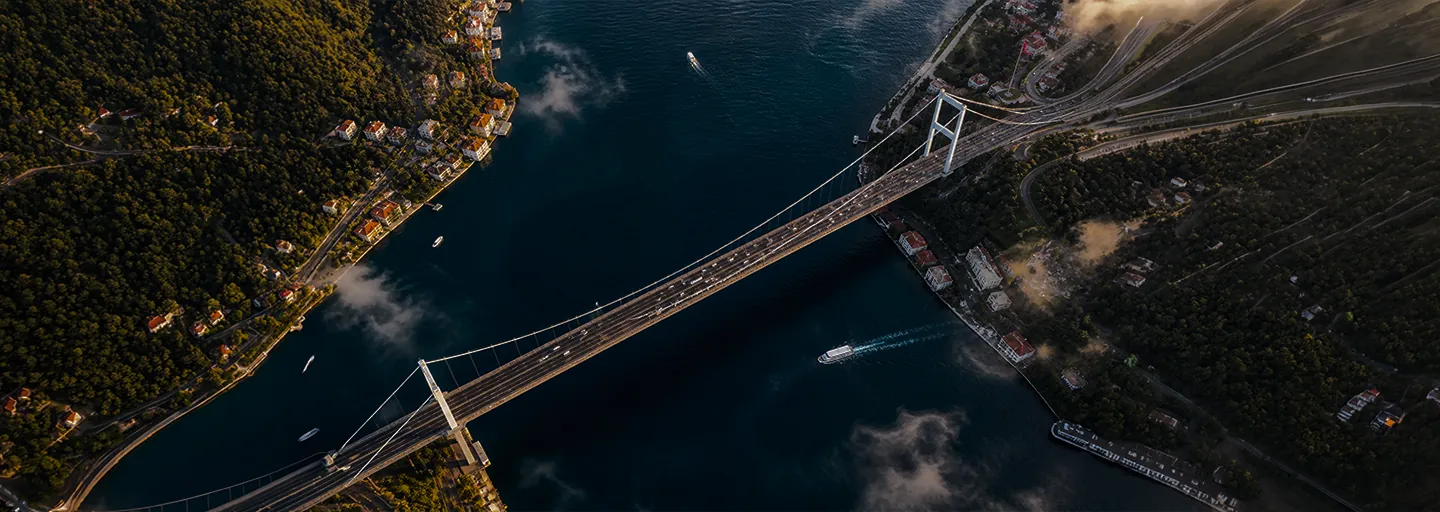
Türkiye's role here isn't incidental. For Gulf capital and Middle Eastern business leaders seeking a place to stabilize operations, Türkiye offers something specific and valuable: a jurisdiction with a sophisticated commercial legal system, genuine international arbitration infrastructure, and a regulatory environment that is both transparent and navigable. Not a transit point, but a genuine management hub — somewhere you can anchor operations, make decisions with confidence, and weather prolonged uncertainty without watching your structure quietly come apart.
At Köprü A.Ş., this is the work we've been doing for thirty years. Not just company formation and registration, but the deeper strategic architecture that determines whether a business holds its shape when conditions change.